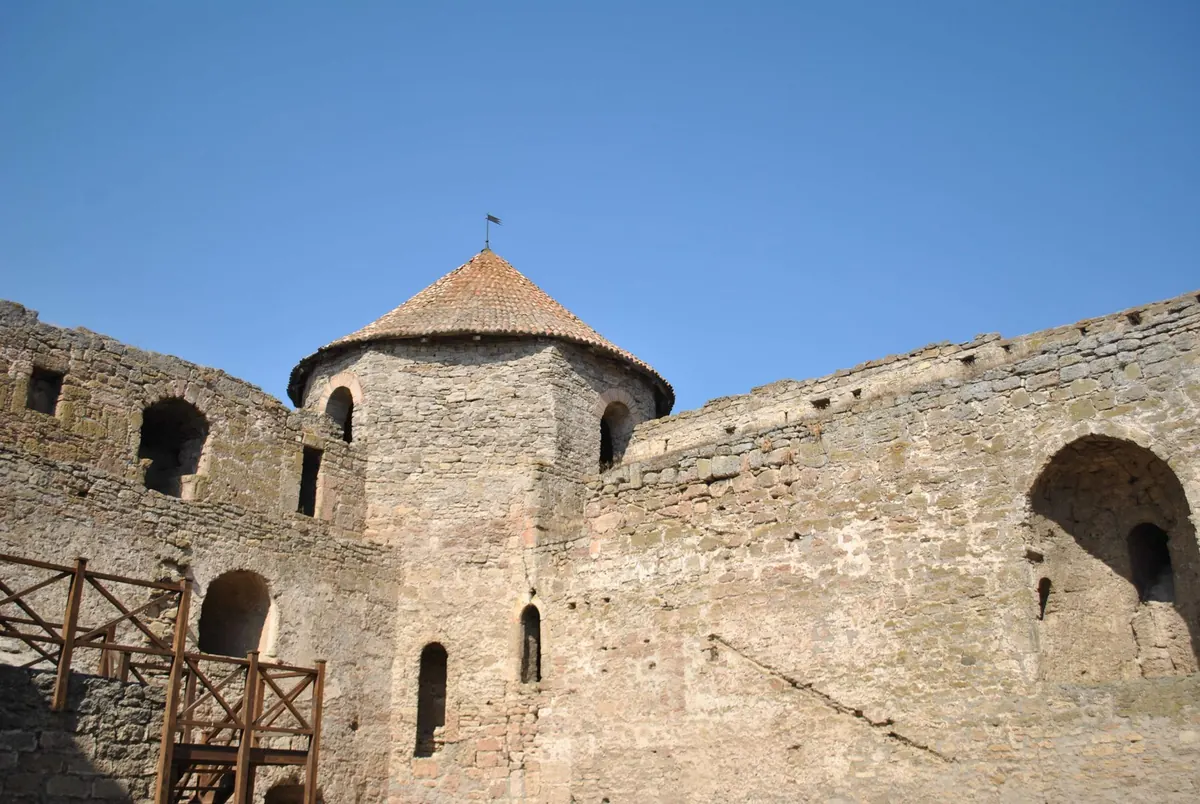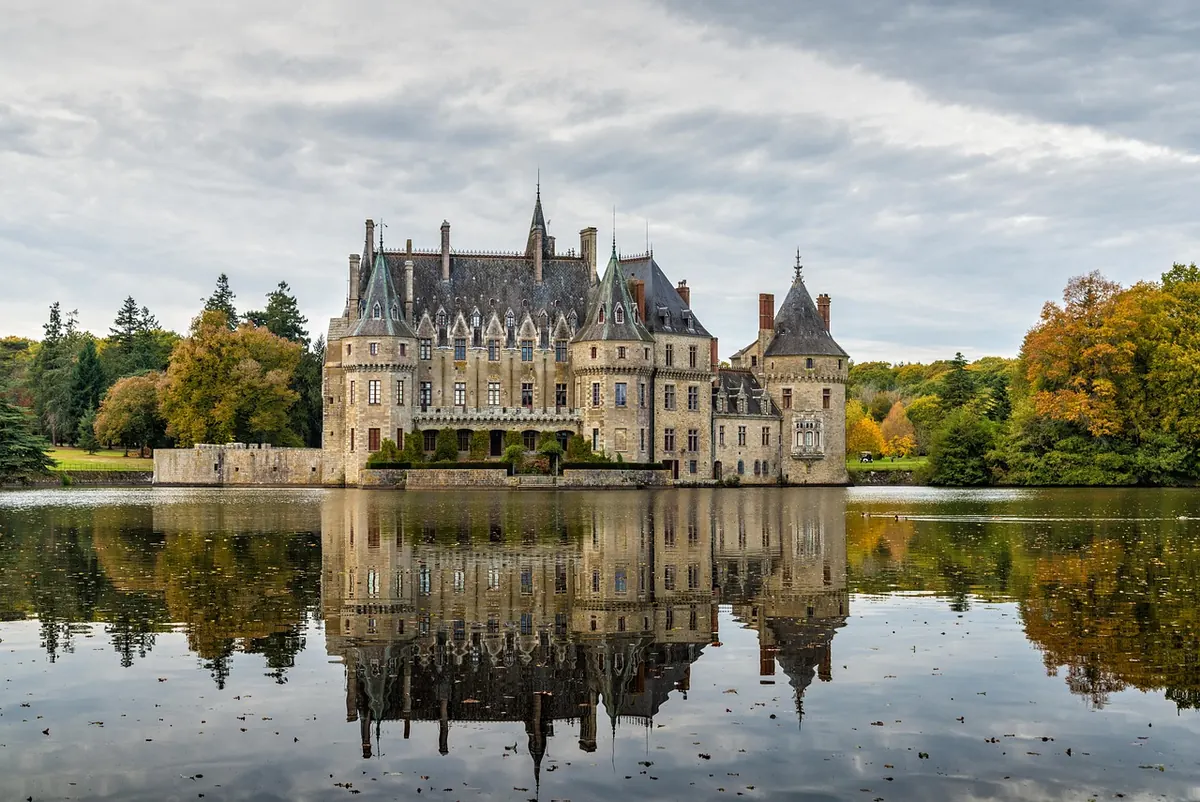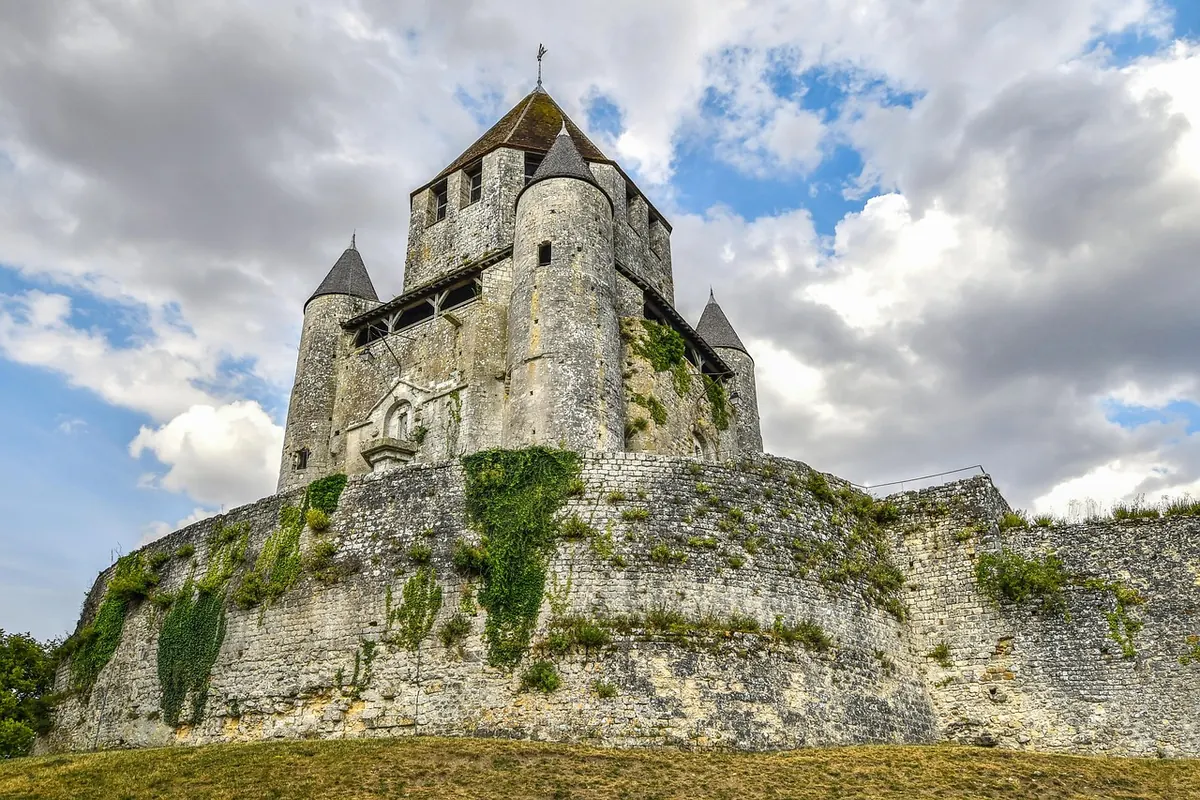
A castle and a fortress can stand ten miles apart, be raised within a century of each other, and still answer completely different questions. One was somebody's home. The other was a machine for holding ground.
The site sign rarely says so. Both present thick walls, a guarded gate, and towers that look imposing from below. Once you know what each building was actually for, though, the details stop being decorative and start reading like a set of instructions.
The Core Difference: Household vs. Garrison
A castle — from the Latin castellum — was the fortified residence of a lord. Its job was to shelter a household and project the authority of the person living there. It was also an administrative centre: rents collected, courts held, grain stored, tenants and neighbours dealt with. The fortification served the life inside it.
A fortress was built to deny ground to an enemy. It was held by a monarch, a state, or an army, staffed by a garrison that rotated in and out, and usually sited where geography mattered: a border, a harbour, a mountain pass, a river crossing. Nobody inherited a fortress the way a family inherited a castle. You were posted there.
There is real overlap. Commanders lived inside the fortresses they governed, and plenty of castles were besieged and stormed. The distinction is not "which one could fight" — it is what the walls were built around. A household, or a garrison.
Castles Were Built Around a Household
Walk a castle's ground floor and you find a great hall, kitchens, a chapel, stables, a bakehouse, a brewhouse, wells and latrines. Even in uncompromising buildings such as Dover's keep or the great castles of north Wales, the rooms are arranged for people to eat, sleep, pray, and give birth in. The lord's private chamber sat above the hall, reached by its own stair.
Windows tell the same story. In many castles, the outward faces are near-blind while the courtyard elevations open up with larger openings, fireplaces, and carved detail. Defence faced out; comfort faced in.
Not every castle was a hardened military position. Bodiam in Sussex, built in the late fourteenth century, has a fine moat and a fine gatehouse, and lodgings that speak more about status than survival. Many castles were never seriously attacked. A tall keep above a river valley was a claim stated in stone as much as a defensive tool.
Fortresses Were Built Around Firepower
Gunpowder forced the split wide open. From roughly the fifteenth century onward, tall vertical walls simply could not withstand cannon fire, and builders responded with a completely different geometry: lower and thicker walls, sloped faces, earth packed behind masonry to absorb impact, and angled bastions that let defenders sweep the base of the next wall with crossfire. Outworks multiplied — ravelins, hornworks, ditches with firing galleries cut into the counterscarp.
The result, seen from above, is a star or a polygon. The French engineer Sébastien Le Prestre de Vauban systematised this approach in the seventeenth century, and his layouts shaped fortification across Europe and beyond. Inside, you find barracks, magazines, powder stores, and guardrooms. You do not find a great hall, a family chapel, or apartments passed down through generations. The five-sided brick fort at Charleston and the star-shaped works guarding Baltimore harbour belong to this lineage, as do the ring of fortifications around Valletta.
Reading the Walls: A Field Guide
Stand in a gateway and look for these clues. Any one is suggestive; several together are close to conclusive.
- A great hall, kitchens, and private apartments: castle. Living space was the priority, and the defences wrap around it.
- Bastions, ravelins, and a star-shaped plan from above: fortress, designed for artillery and interlocking fields of fire.
- Large windows and fireplaces facing an inner courtyard: castle. Comfortable inside, hard-faced outside.
- Low, thick, sloping ramparts with earth behind them: fortress. Built to shrug off shot rather than to look tall.
- A gatehouse with portcullis, murder holes, and a barbican: castle. Focused on stopping a raiding party at a choke point.
- Detached outworks, barracks blocks, and powder magazines: fortress, scaled for a garrison on duty.
- Heraldry, a chapel, and a hall even inside the walls: castle, with a family attached.
- A citadel on the high ground above a town: fortress — often as much a reminder to the town as a shield for it.
Citadels, Forts, and the Blurry Middle
The vocabulary is messier than the architecture. A citadel is a fortress built within or beside a city, intended to control the place it defends. A fort is generally smaller and narrower in purpose — a coastal battery, a frontier post, a blockhouse. A tower house in Scotland or Ireland, or a fortified manor in England, is a gentry-scale version of the castle idea: defended home first, military installation second.
Languages split the difference differently, which is why translated guidebooks mislead. French château covers everything from a medieval stronghold to a country house. German is more precise: Burg for a castle, Festung for a fortress, Schloss for a palace. So when a sign calls something a castle, treat the word as a label, not a diagnosis. Judge by the plan and the rooms.
Ask what the walls were built around. The answer usually settles the argument in a single glance.
How to Tell Which One You're Standing In
On your next visit, work through this in order. It takes about ten minutes and turns a pleasant ruin into a legible one.
- Find the site plan. A star, a polygon, or a chain of detached works points to artillery-era military design. An irregular enclosure around a hall and courtyard points to a castle.
- Count the chimneys. Chimneys mean fireplaces, fireplaces mean heated rooms, and heated rooms mean people living there permanently.
- Check where the big windows face. Openings toward the courtyard or the unthreatened side suggest domestic life; openings on every face suggest either a fortress with barracks or a castle converted long after its military days ended.
- Look for outworks beyond the main wall. Ditches, ravelins, and covered ways that stand well clear of the buildings are the mark of a professional garrison.
- Ask who paid. A monarch's engineer builds fortresses. A noble family builds castles, and often keeps building on the same spot for centuries.
Many sites had long, untidy lives. A medieval castle re-fortified in the artillery age, a fortress that grew a governor's comfortable house inside its walls, a town wall that became a promenade — these are common and worth expecting. But the underlying question stays the same wherever you are, from a Welsh keep to a Baltic bastion: was this place built to house a family or to hold a line? Answer that, and everything else about the building starts to make sense.
Photo: christels / Pixabay